Tag Archives: CAC Wirraway

Cowling Confusion – The Facts About Wirraway Engine Cowls

During the course of their 20 years of service with the RAAF, CAC Wirraway aircraft were fitted with several different types of engine cowls.

There has been some confusion on this topic, particularly among scale modellers, which has been added to by a well-known kit manufacturer.

This short article is intended to remove any confusion about the types of cowls used and when they came into use.

Background

First, let’s look at the basic design of the engine cowling. The cowling wraps tightly around the outside ends of the cylinder heads of the radial Pratt & Whitney Wasp engine, working in combination with baffles between the cylinder heads to both cool the engine and provide forward thrust.

As with other members of the NA-16 family, the engine cowl on the NA-32 (NA-16-1A) demonstrator was constructed in two sections for easy installation and removal. The joint lines were roughly at 10 o’clock and four o’clock when viewing the aircraft from the front. The halves were officially described as “upper” and “lower” halves.
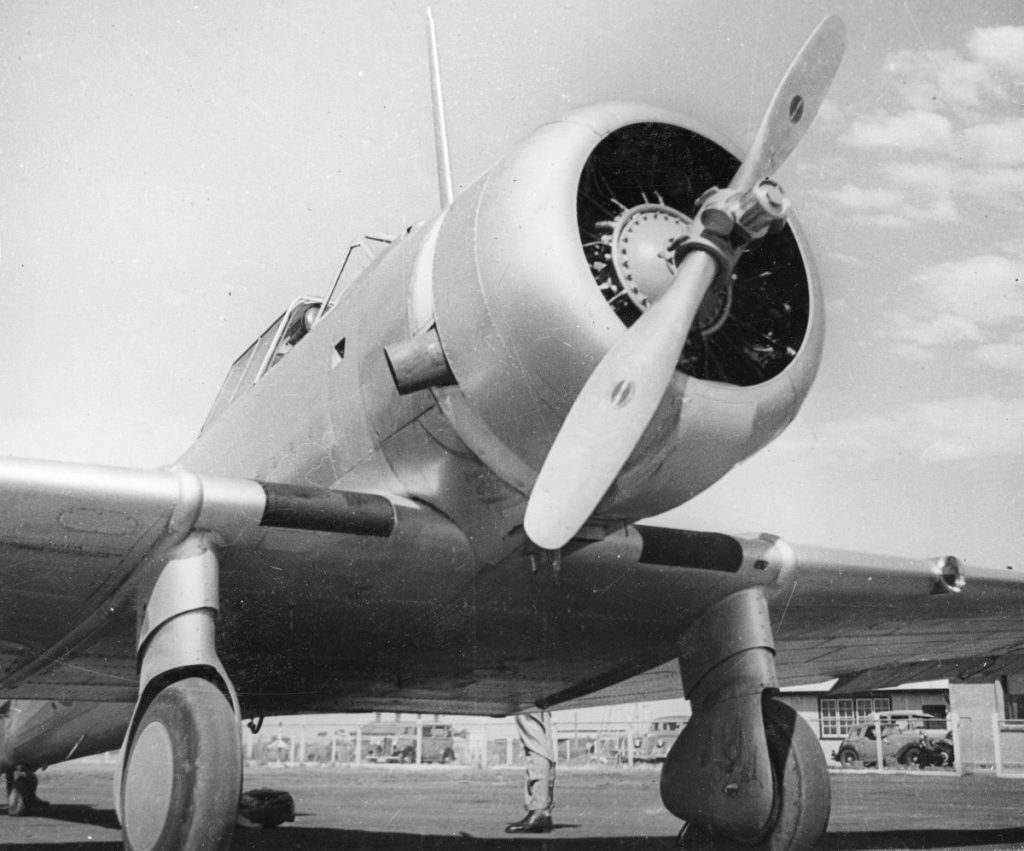
The NA-16-1A demonstrator purchased by CAC for evaluation by the RAAF. It was later sold to the RAAF and became A20-1.

Clamps inside the cowl allowed it to be tightened against the cylinder heads, with heat-resistant felt pads between the cowl and the cylinder heads. The lower half of the cowl incorporated an intake for cold carburettor air (just inside the lower lip of the cowling) and a duct taking the cold carburettor air to the rear of the cowl. The duct protruded slightly below the underside of the cowl. Oil cooler air was drawn from the inside of the cowl via a duct between cylinders 2 and 3. This duct is sometimes visible in photos showing the port side of the aircraft.

The engine cowl on the NA-33 (NA-16-2K) demonstrator was longer than the cowl on the NA-32, since the NA-33 was fitted with a geared engine, as was the Wirraway. The engine cowling was of the same design, but extended by 4 inches to accommodate the longer engine. The lower cowl included the cold carburettor air intake and duct. Oil cooler air was taken from inside the cowl, but on the NA-33 two ducts lead to the oil cooler, one between cylinders 2 and 3 and the other between cylinders 3 and 4. The NA-33 also featured more louvres in the fuselage cowling to allow airflow out of the oil cooler.

CA-1 Cowling

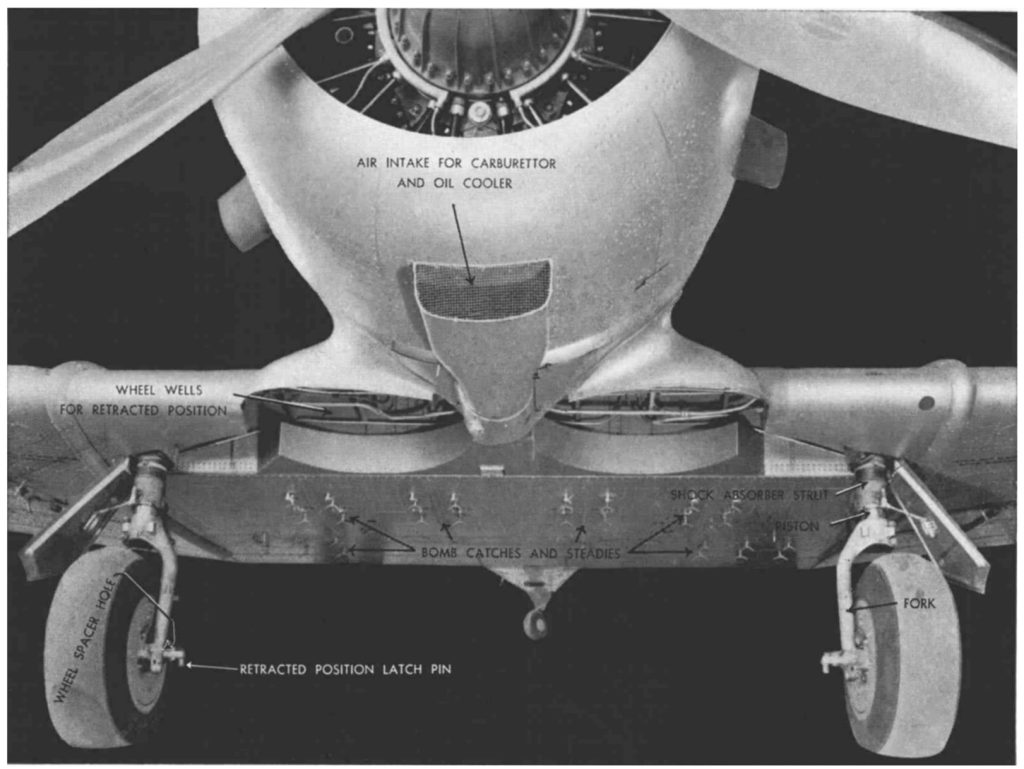
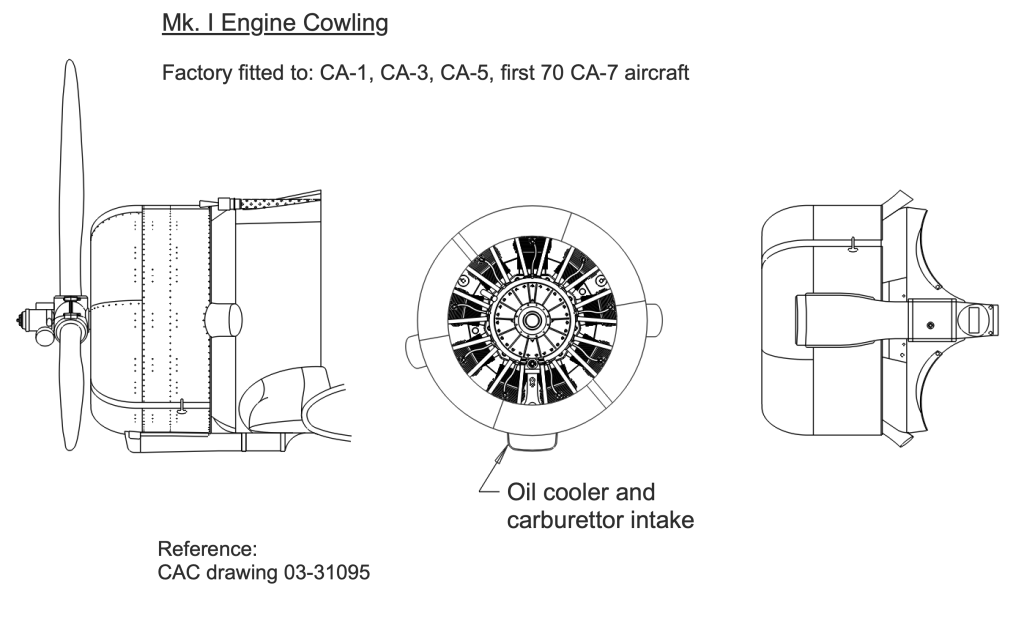
The adaptation of the NA-33 design to production as the Wirraway Mk. I included the addition an extra fixed gun in front of the pilot. This necessitated relocating the high-mounted oil cooler to a lower position, aft of the underside of the engine cowl, between the wheel wells. Therefore the cold carburettor air intake on the lower half of the cowl was modified to feed both the oil cooler as well as the cold carburettor air[1].

The front opening was enlarged and positioned below the cowl. When viewed from below, the intake duct was parallel for the first 11 inches and then tapered to match the diameter of the oil cooler. At the point of tapering, an internal duct led some of the airflow upwards to feed cold air to the carburettor via a mixing chamber, where the proportions of cold and hot air fed to the carburettor could be controlled by a butterfly valve actuated from inside the cockpit. A simple wire-mesh screen was fitted across the front of the air intake to prevent the ingress of foreign objects such as stones or leaves.

All Mk. I Wirraways produced under the CA-1 contract (A20-3 to A20-42) were fitted with this initial air intake design. Mk. II Wirraways produced under the CA-3, CA-5 contracts and the first 202 aircraft under the CA-7 contract (A20-43 to A20-203, delivered between 16/02/1940 and 24/12/1940) also featured this single air intake design.
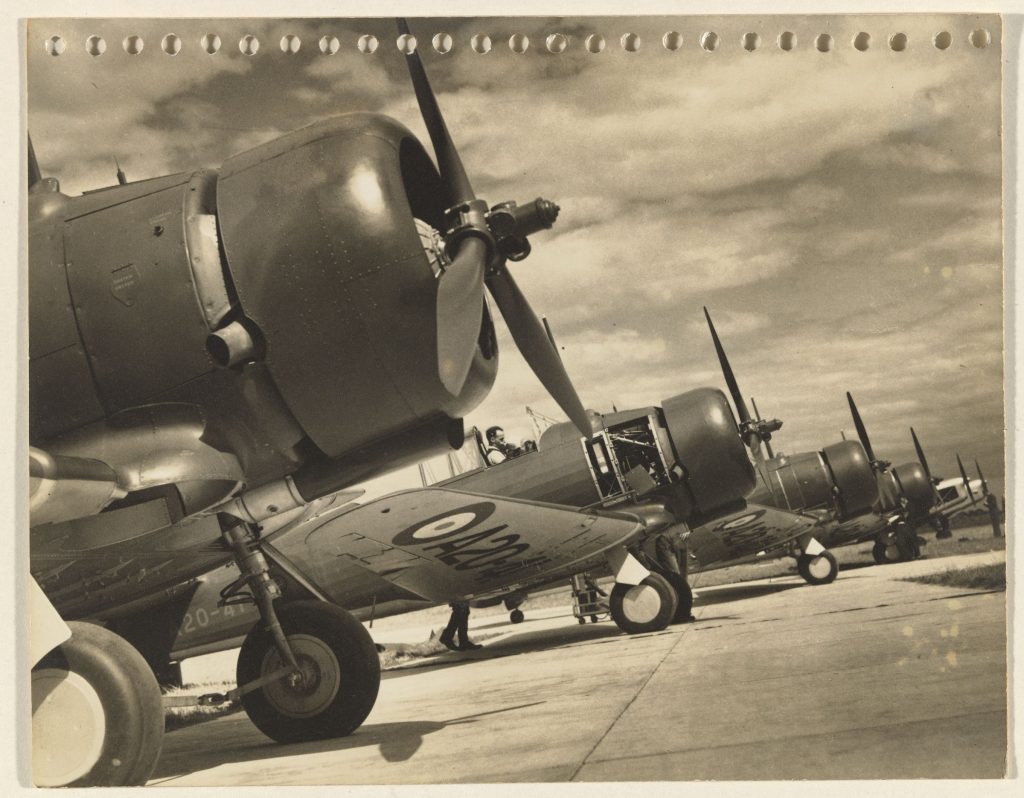
Several of the last Wirraways from the CA-1 production contract, A20-41 being visible.
An image from the Wirraway Overhaul and Repair Manual, showing the CA-1 engine cowling with its single air intake, supplying both the carburettor and the oil cooler.

Riverina Dust and Cylinder Wear

The air intake on the “CA-1 cowling” was adequate for engine cooling and air induction under most conditions, but the decision to locate several Service Flying Training Schools in the Riverina district of Southern New South Wales introduced an issue which the “CA-1 cowling” was not designed to accommodate. The runways at these Schools were unpaved paddocks, and dust quickly became a major problem for Wirraways operating in these conditions. This was particularly the case for No 5 SFTS at Uranquinty, where the largest number of Wirraways were based at one school. Fine particles of dust sucked into the carburettor made their way inside the cylinders, causing rapid wear of the pistons and cylinder liners.

CAC Service Engineer Ewart Chennery visited a number of RAAF units operating Wirraways to check on their performance and at the end of January 1942 he reported that only 14% of Wirraways at 5 SFTS were serviceable, mostly due to engine wear[2]. An engine overhaul workshop was also established at No. 5 Aircraft Depot, RAAF Forest Hill, near Wagga, to service worn engines. A similar problem arose with the Cheetah engines on Avro Ansons.

Numerous trials were carried out to solve this dust-ingestion problem, and several design changes were made to the air intakes and air cleaners in subsequent Wirraway production models.

Order 87 Twin Air Scoop

The first change to the air intakes in an attempt to resolve the issue of dust ingestion came in late 1940 with a redesigned lower cowl air scoop that incorporated a second air intake below the main intake. The second scoop fed air to the oil cooler, leaving the main scoop to supply only the cold carburettor air, and a filter element was added at the front of the main air scoop in an attempt to remove dust from air going to the engine induction system.

This modified air scoop design was fitted at the factory to the last 30 aircraft of the CA-7 contract (A20-204 to 234, delivered between 28/12/1940 and 26/3/1941).

This change was officially promulgated with the release of Wirraway Technical Order Number 87 Engine Cowling – Bottom Half – Fitting of Air Cleaners[3] on 12 December 1941. This Order briefly described “a modified type of bottom-half engine cowling in which an air cleaner is incorporated in the air scoop”. A filter element (“Cleaner Assembly”, part number 08-31016) was added behind the mesh screen on the main intake[4], which fed only the cold carburettor air, to remove dust from the incoming air.

This modified “Order 87 scoop” was also fitted at the factory to Mk. II aircraft delivered under the CA-8 and CA-9 contracts (A20-235 to A20-622, deliveries from 30/03/1941 to 21/06/1942).
The modified air scoop assembly was also fitted all aircraft already in service (A20-3 to 203) with replacement lower cowls shipped to units via No. 1 Aircraft Depot, Laverton.
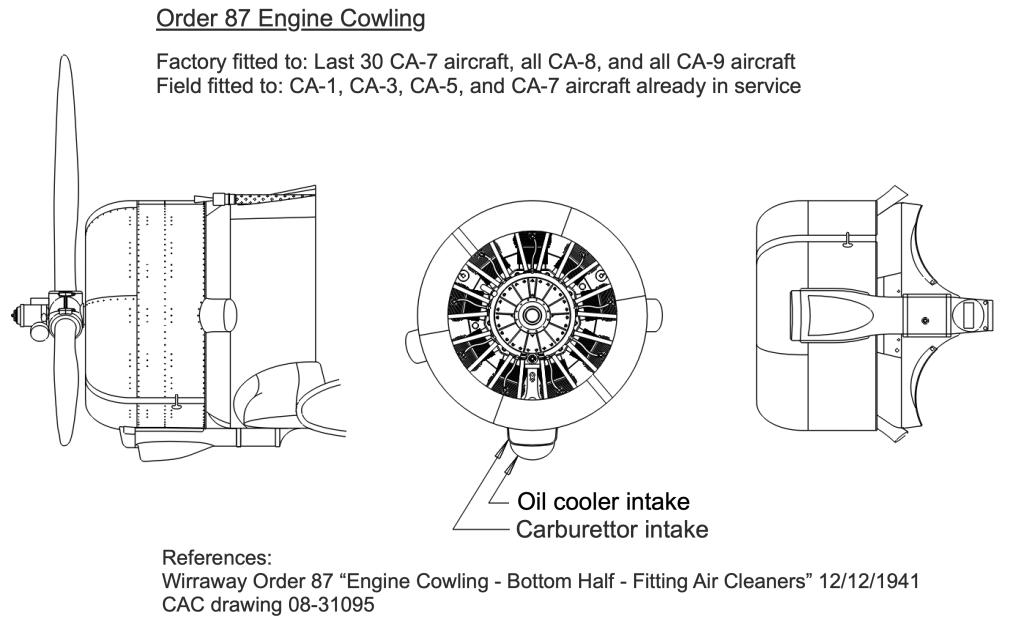
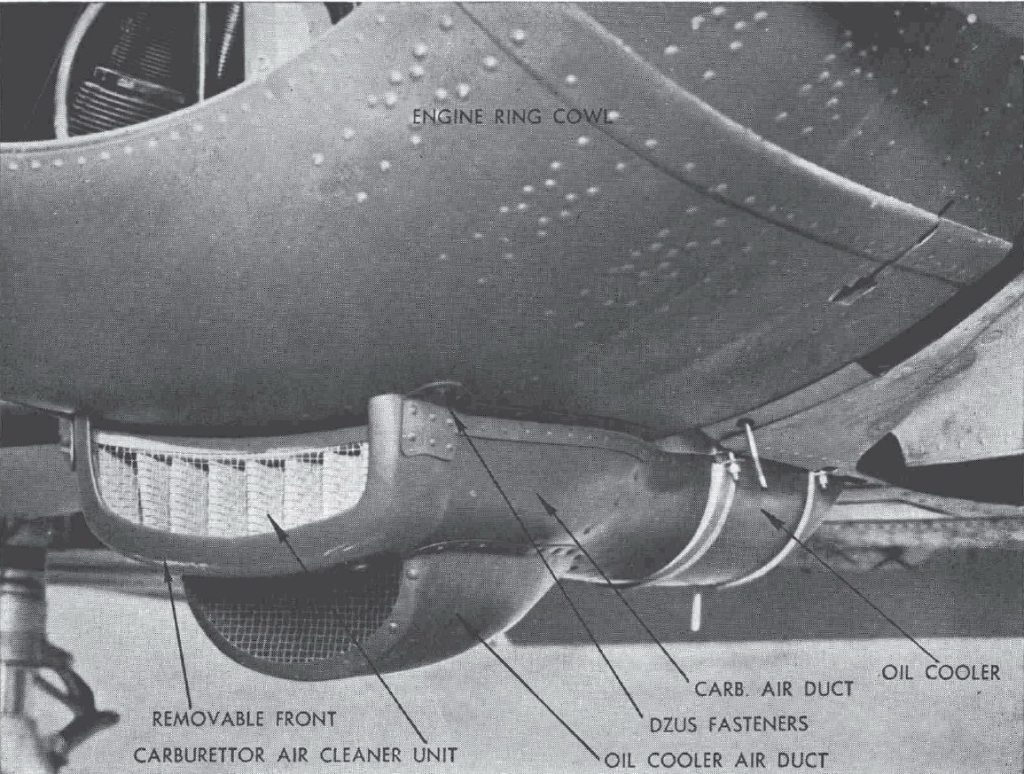
An image from the Wirraway Overhaul and Repair Manual, showing the “Order 87” engine cowling with two air intakes, one for the carburettor and one for the oil cooler.

Improvements did not stop with the “Order 87 Scoop”. An experimental air intake with filter was shown in the undated RAAF drawing A2554[5]. This was a modification of the “Order 87 Scoop”, with cold carburettor air taken from inside the lower lip of the cowling, rather than an external scoop. This was similar to the arrangement on the NA-32 and NA-33 cowls. Air for the oil cooler was still drawn in via the second (lower) intake.

Order 108 Lower Cowling

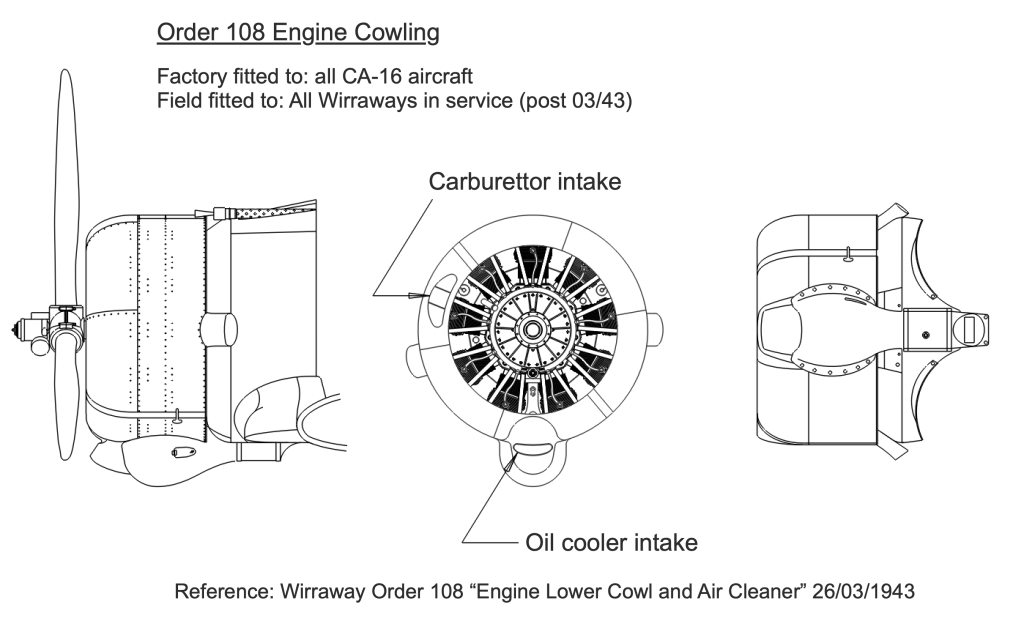
By October 1942 a new design for the lower cowl was in progress following discussions between DTS, Lawrence Wackett and Ellis Wackett (AMEM). This design featured a raised intake and duct for carburettor air. The urgency of moving ahead with the installation of this new type of lower cowl resulted in a discussion by the Air Board on 19 November 1942[6]. ??? (AMSE) explained that the cylinder wear due to dust ingestion was costing in the vicinity of £5,000 per week for 8 months of the year, and 20-25% of this amount could be saved with the new type of filter. It was estimated that 500 sets would be required, at a total cost of £17,500 (£35 per aircraft). It was agreed by the Air Board that Ministerial approval be sought under War Cabinet minute No. 1573, and that DAP Demand 1034 for £17,500 be approved. Air Minister Arthur Drakeford approved the Air Board’s request on 26 November 1943. CAC modification 01-M3110 “Addition of Upper Scoop and Cleaner” provided the details of the modification.

Wirraway Order 108 Engine Lower Cowl and Air Cleaner – Modification was issued on 26 March 1943 and called for the lower engine cowl on all aircraft to be replaced with a new lower cowl incorporating a raised intake for cold carburettor air. The order applied to all Mk. I and II aircraft in service (A20-3 to A20-622 inclusive), with aircraft A20-623 and later (Mk. III aircraft delivered under the CA-16 contract) to be modified by the manufacturer as they were produced. New lower cowls were shipped direct to RAAF units from the supplier, Wunderlich Limited, in Sydney. Redundant lower cowls with the “CA-8 scoop” were packed in the delivery crates and shipped back to Wunderlich Limited.
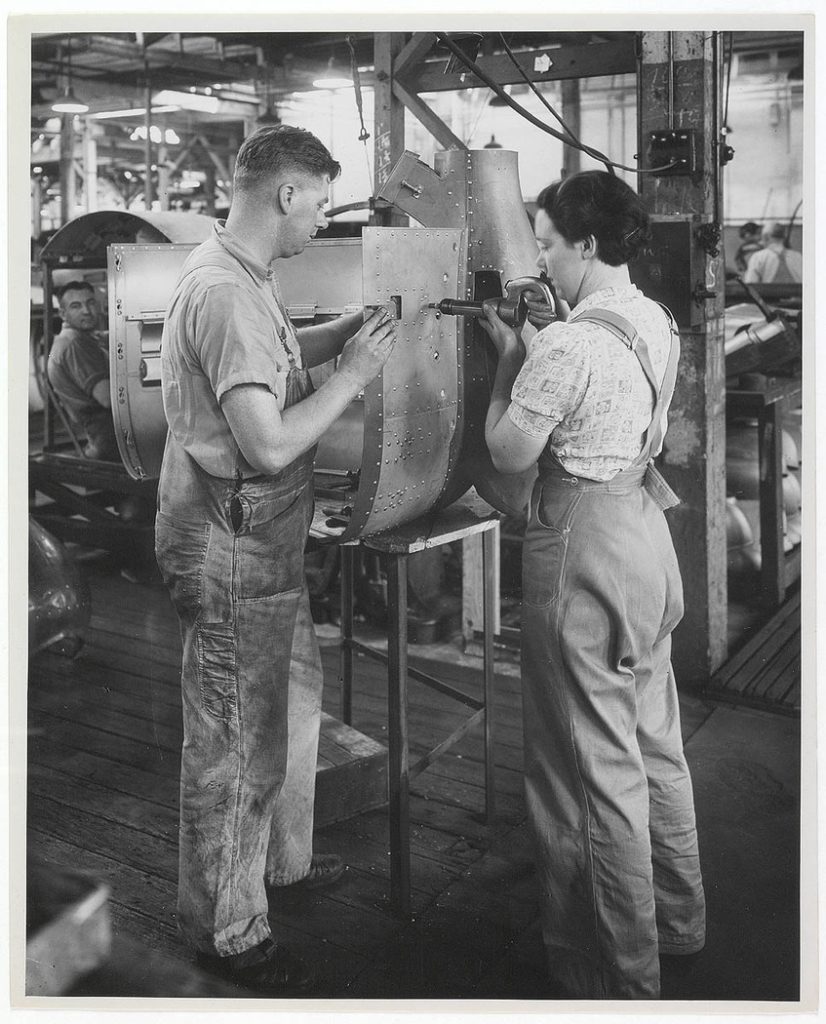
Workers at the Wunderlich Redfern factory assembling “Order 108” lower cowlings.

The first Mk. III aircraft delivered under the CA-16 contract (A20-623) was delivered to the RAAF on 23/11/1943, fitted with an Order 108 lower cowling during final assembly.
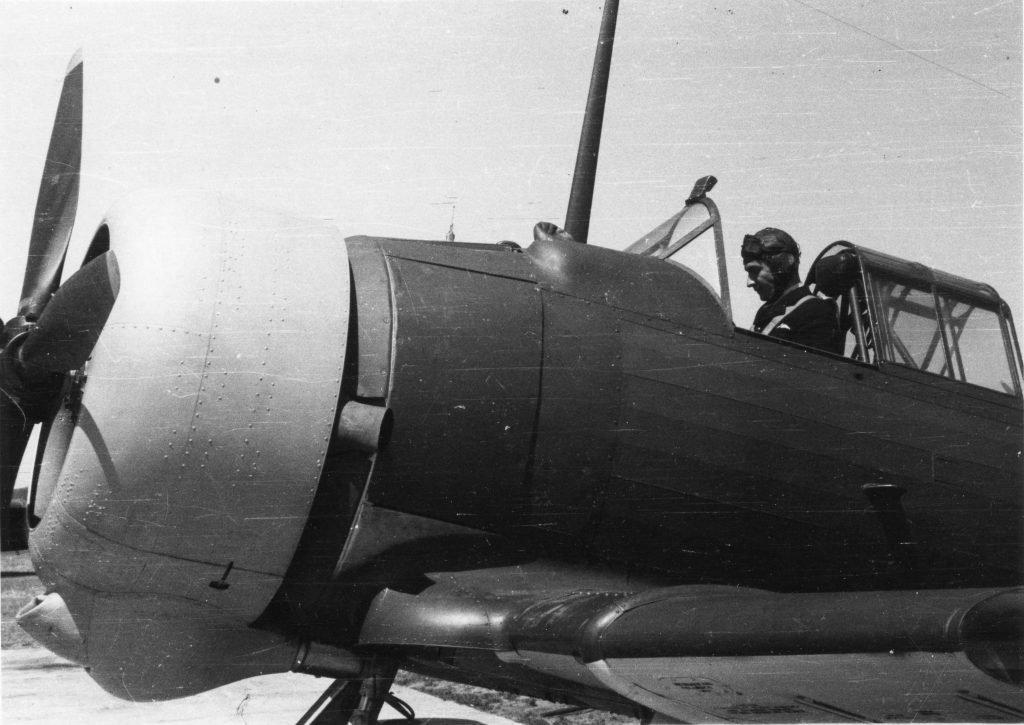
A20-623 was the first Wirraway delivered against the CA-16 contract, with the “Order 108” lower cowling fitted at the factory
Wirraway Mark III A20-728 on the production line (Australian National Aviation Museum). The separate air intakes for carburettor air (upper) and oil cooler (lower) are clearly visible on the “Order 108” cowling

The design of the Order 108 lower cowling incorporated several changes, relating to both improved carburettor air filtering and reducing accidental engine starting fires. The raised intake for cold carburettor air fed through a duct along the leading edge of the lower cowling down to a large bulbous chamber surrounding the air cleaner element. The bulbous chamber also served as a flame damper in the case of a back-fire during starting, often caused if too much fuel was primed into the engine prior to starting.

References:
[1] CAC drawing 03-31095 Assembly, Air Intake Scoop 23/05/1939
[2] Meggs, Australian-Built Aircraft and the Industry, Volume 2 Book 1, Echelon Starboard, 2020, p. 85 and p. 356
[3] NAA: A705, 150/4/1647, 1119874
[4] CAC drawing 08-31095 Assembly, Air Intake Scoop 29/11/1940
[5] NAA 440026
[6] NAA 24488837 Air Board Agenda 4416 (RAAF) Modification of lower half engine cowls on Wirraway aircraft – Department of Aircraft Production No. 1034

The Wirraway ‘Newspaper War’

Between August 1935 and April 1938 a “battle” was waged between several newspapers, arguing about the merits of producing an American-designed aircraft in an Australian factory, for use by the Royal Australian Air Force.

Here’s an example of some of the negative headlines which appeared during this period:

Click on the link below to read my article in the Australia ICOMOS journal Historic Environment about the “newspaper war”:

Historic Environment Volume 33 Number 3 – 2021 The Wirraway ‘Newspaper War’

The problem with scale drawings of the CAC Wirraway

In my research for the detailed scale drawings of the Wirraway which appear elsewhere on this site, I collected a wide range of scale drawings created by other draftsmen.

The problem is that none of them are accurate.

That’s why I decided to create my own drawings.

The list below provides some details and comments about these drawings that I collected (the drawings are listed by publication date, with the earliest at the top).

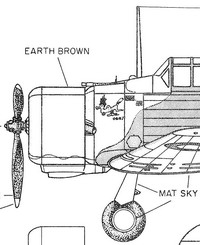
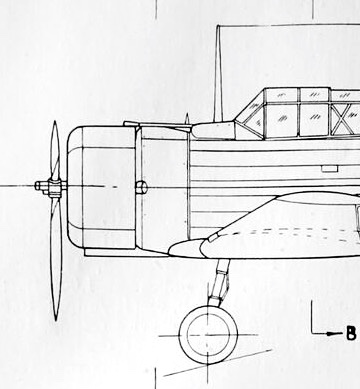
Since the drawings are of course copyright material, I’ve included only a small snippet from each drawing, showing the nose of the aircraft.


Drawing by: Unknown
Date published: December 1941 (first impression)
Source: Aircraft of the Fighting Powers (Volume II), Compiled by H.J. Cooper and O.G. Thetford, edited by D.A. Russell
Comments: This is the earliest published drawing I’ve uncovered (apart from factory drawings, which were not published) and is from a contemporary wartime publication. It follows the general outline of the Wirraway, but many details are not accurate.


Drawing by: Chuck Graham
Date published: 1966
Source: IPMS Newsletter
Comments: This drawing shows details for a Wirraway Mk II (produced under contract CA-5), in the markings of A20-103 (the aircraft now held at the Australian War Memorial collection).

This drawing was primarily intended to display the colours and markings of A20-103, but when checked against aircraft measurements, several dimensional inaccuracies are readily apparent:

  • Most noticeably, the engine cowl is drawn too long by 10.5″
  • The wing chord is drawn 2″ too long and the wing is shown 5″ too far forward
  • The wing is drawn around 3.5″ lower than its actual location
  • In the plan view the fairing between the wing and fuselage is shown becoming wider in a curve towards the trailing edge. The actual fairing follows a straight line parallel to the centre of the aircraft along the top skin of the wing centre section. The curved front section of this fairing is also drawn incorrectly where it meets the wheel housing.
  • In the plan view the walk-ways on the wing centre-section are shown as panel lines, but this is incorrect.

Drawing by: F. Pawlowicz
Date published: December 1973
Source: Aeromodeller magazine
Comments: This drawing shows details for the CA-1 Wirraway Mk I, in the markings of A20-10 (the aircraft now held at the Australian National Aviation Museum in Moorabbin). However the drawing shows A20-10 following an upgrade to the late-style oil cooler and carburettor air intake below the cowl (which became standard on the Mk III), so the drawing does not represent an “as-built” CA-1. The drawing was originally drafted at 1:24 scale (copies can still be purchased from Model Activity Press) and reproduced in the December 1973 magazine at 1:48 scale, accompanying descriptive text written by Joe Vella.

When checked against aircraft measurements, several inaccuracies appear on this drawing:

  • The tail-plane is drawn about 4″ lower than it’s actual location
  • The wing is drawn around 3″ lower than it’s actual location
  • The canopy rail is drawn around 3″ lower than it’s actual location
  • The angle of the windscreen is too “raked”, at 50° from vertical, wheras it should actually be 44.7° from vertical
  • The plan-view shows the fuselage bulging outwards between stations 27 and 106, but in reality the fuselage width is constant between these stations
  • The antenna mast is drawn 8″ too far forward
  • The fairing between the wing and fuselage is shown becoming wider in a curve towards the trailing edge. The actual fairing follows a straight line parallel to the centre of the aircraft along the top skin of the wing centre section. The curved front section of this fairing is also drawn incorrectly where it meets the wheel housing.
  • The walk-ways on the wing centre-section are shown as panel lines, but this is incorrect
  • The propeller is listed as a “3 bladed controllable speed metal propeller” but the propeller is in fact “controllable pitch” for constant speed operation
  • The configuration of bombs indicated in the scrap-view is incorrect. The larger bombs (500lb Semi Armour Piercing bombs) could only be mounted on the inner universal carriers on the outer wing panels (wheras they are shown mounted on the outer universal carrier positions).

It appears that this drawing became the main reference for later draughtsmen, as many of the later drawings shown below repeat the inaccuracies included in this drawing.


Drawing by: Zbigniew Luranc
Date published: 1987
Source: Unknown
Comments: This drawing also shows the aircraft A20-10 following its cowling changes, so it is not representative of a CA-1 from the factory. The drawings were published in the magazine at 1:50 scale.

When checked against aircraft measurements, several inaccuracies can be seen on this drawing (many of which are the same as for the Pawlowicz drawing, leading to the conclusion that these drawings may have been traced from the Pawlowicz drawing):

  • The tail-plane is drawn about 4″ lower than it’s actual location
  • The wing is drawn around 3″ lower than it’s actual location
  • The canopy rail is drawn around 3″ lower than it’s actual location
  • The plan-view shows the fuselage bulging outwards between stations 27 and 106, but in reality the fuselage width is constant between these stations
  • The antenna mast is drawn 8″ too far forward
  • The configuration of bombs is incorrect. The larger bombs (227 kg / 500 lb Semi Armour Piercing bombs) could only be mounted on the inner universal carriers on the outer wing panels (wheras they are shown mounted on the outer carrier positions)

Drawing by: Perry Manley
Date published: 1989
Source: Published in the book T-6 Texan In Action by Larry Davis; Squadron/Signal Publications, Carrollton Texas, 1989
Comments: A port elevation is included in this book accompanying the chapter on the Wirraway and Boomerang.

When checked against aircraft measurements, several inaccuracies are obvious on this drawing:

  • The tail-plane is drawn about 4″ lower than it’s actual location
  • The wing is drawn around 3″ lower than it’s actual location, and the outer wing trailing edge is swept forward while the Wirraway trailing edge has no sweep
  • The canopy rail is drawn around 3″ lower than it’s actual location
  • The antenna mast is too tall
  • The engine cowl is drawn around 2″ too far forward, and the air intake is not the correct shape
  • The drawing appears to show a 2-bladed propellor, the diameter of which is too small

Drawing by: Alex Pedashenko
Date published: 1991
Source: Published in the book Wirraway, Boomerang and CA-15 In Australian Service by Stewart Wilson, Sydney, 1991
Comments: A 3-view drawing appears in Stewart Wilson’s book, but no draftsman is noted on the drawing. The drawing features the “signature” style of Alex Pedashenko (particularly the tufts of grass on the ground-planes), and Stewart indicated that he had received several drawings from Alex, hence it makes sense that Alex was the draftsman.

The drawing is listed as depicting the CA-3 and CA-9 aircraft (Mk II).

When checked against aircraft measurements, several inaccuracies appear on this drawing (many of which are the same as for the Pawlowicz drawing, leading to the conclusion that these drawings may have been traced from the Pawlowicz drawing):

  • The tail-plane is drawn about 3″ lower than it’s actual location
  • The thrust-line is drawn around 4″ higher than it’s actual location – this results in the entire cowling being around 4″ higher than it should be
  • The plan-view shows the fuselage bulging outwards between stations 27 and 106, but in reality the fuselage width is constant between these stations
  • The antenna mast is drawn 8″ too far forward

Drawing by: Colin Owers
Date published: 1992
Source: Aviation News magazine, September-October 1992
Comments: This drawing shows details for several different versions of the Wirraway, however the views are not labelled. The drawings were published in the magazine at 1:72 scale. The same drawings were published in Air Enthusiast 50, alongside Owers’ article about the Wirraway.

When checked against aircraft measurements, several inaccuracies appear on this drawing (many of which are the same as for the Pawlowicz drawing, leading to the conclusion that these drawings may have been traced from the Pawlowicz drawing):

  • The tail-plane is drawn about 4″ lower than it’s actual location
  • The wing is drawn around 3″ higher than it’s actual location
  • The canopy rail is drawn around 4″ lower than it’s actual location
  • The plan-view shows the fuselage bulging outwards between stations 27 and 106, but in reality the fuselage width is constant between these stations
  • Several features are shown on the starboard side of the fuselage which are not actually there (the fuselage is not symmetrical)
  • The underside view of the centre section and rear fuselage is not accurate
  • The antenna mast is drawn 8″ too far forward

Drawing by: Joe Vella
Date published: 1995
Source: Air Enthusiast magazine No. 61 Jan-Feb 1996
Comments: A small 3-view drawing by Joe Vella appeared alongside his article about the aircraft of CAC.

The drawing depicts the CA-16 aircraft (Mk III) and shows the differences to other versions.

When checked against aircraft measurements, several inaccuracies appear on this drawing (many of which are the same as for the Pawlowicz drawing, leading to the conclusion that these drawings may have been traced from the Pawlowicz drawing):

  • The tail-plane is drawn about 3″ lower than it’s actual location
  • The wing is drawn around 3″ lower than it’s actual location
  • The canopy rail is drawn around 3″ lower than it’s actual location
  • The antenna mast is drawn 8″ too far forward

Drawing by: Unknown
Date published: 1997
Source: Published in the book CAC Boomerang CAC Wirraway by Andre Zbigniewski and Jacek Nowicki; Wydawnictwo Militaria, Warsaw, 1997 (published in Polish)
Comments: This drawing (perhaps drafted by Zbigniew Luranc, or based on his drawing) shows the CA-1 ribbed fin skin, but the later style carburettor and oil cooler air intake below the cowl on the same profile, which is misleading unless the aircraft is a very early CA-1 aircraft which has been upgraded.

The drawing does however correctly show the different access panels and covers on the port fuselage side compared to the starboard side.

When checked against aircraft measurements, several inaccuracies appear on this drawing
(many of which are the same as for the Pawlowicz drawing, leading to the conclusion that these drawings may have been traced from the Pawlowicz drawing):

  • The engine, cowl and propeller have been drawn 4″ above their correct location; it appears the draftsman has laid the thrust-line over the fuselage centre-line (or reference line) when in fact the thrust-line is 4″ below the fuselage centre-line
  • The plan-view shows the fuselage bulging outwards between stations 27 and 106, but the actual fuselage width is constant between these stations
  • The antenna mast is drawn 8″ too far forward
  • The configuration of bombs is incorrect. The larger bombs (227 kg / 500 lb Semi Armour Piercing bombs) could only be mounted on the inner universal carriers on the outer wing panels (wheras they are shown mounted on the outer carrier positions)
  • The instument panel layout shown on the drawing is for the CAC Boomerang, not the Wirraway

Drawing by: Richard J. Caruana
Date published: November 2003
Source: Scale Aviation Modeller International magazine, Volume 9 Issue 11 November 2003
Comments: This drawing also shows details for several different versions of the Wirraway (Mk I, Mk II and Mk III) but again the views are not labelled. The drawings were published in the magazine at 1:48 scale.

When checked against aircraft measurements, several inaccuracies appear on this drawing (many of which are the same as for the Pawlowicz drawing, leading to the conclusion that these drawings may have been traced from the Pawlowicz drawing):

  • The tail-plane is drawn about 4″ lower than it’s actual location
  • The wing is drawn about 2″ lower than it’s actual location
  • The canopy rail is drawn around 3″ lower than it’s actual location
  • The plan-view shows the fuselage bulging outwards between stations 27 and 106, but in reality the fuselage width is constant between these stations
  • Several features are shown on the starboard side of the fuselage which are not actually there (the fuselage is not symmetrical)
  • The underside view is not accurate around the tail wheel, rear fuselage and engine oil cooler
  • The antenna mast is drawn 4″ too far forward

Wirraway batch numbers – Mark III aircraft

For reference purposes I’ve collated a list of production batch numbers for the CAC Wirraway aircraft delivered to the RAAF between July 1939 and July 1946. This page contains the batch numbers for Mark III Wirraways, which were delivered under the CA-16 production “contract”. A summary of Mark III production is given in the table below:

Wirraway type CAC Contract Number RAAF Contract Demand Ordering entity Order Number Quantity delivered CAC Constructor’s Numbers RAAF Serials
Mk III CA-16 D.A.P. 1007 DAP C.S.1800 135 1075 to 1209 A20-623 to 757

DAP = Department of Aircraft Production

Batch numbers
Wirraway Mark III production was planned in batches of 11 aircraft. But there was one exception:

  • The final batch of production, batch “N” consisted of only 3 aircraft to make up 135 aircraft

Batch numbers consisted of a letter for each batch followed by a number for each aircraft in that batch (e.g. A1, A2, A3, A4, etc)..The letters I, O, Q and V were generally not used as batch numbers, as they could be confused for numbers. The CA-16 contract started with batch “A”.

The definitive source for batch numbers is a ledger book kept by Mr Gordon Parker, Supervisor in the Sales Department, and one of CAC’s earliest employees from 1936. This book is now held in the collection of the Australian National Aviation Museum at Moorabbin Airport.

Unfortunately there are two discrepancies in the last 25 entries in the ledger. Firstly, Parker skipped batch “L” for A20-733 to A20-743 and went straight from “K” to “M”. We know that batch “L” was not skipped in reality, as two surviving data plates reclaimed from airframes at Tocumwal show L2 for A20-734 (c/n 1186) and M5 for A20-748 (c/n 1200). Secondly, Parker stopped recording batch numbers at A20-740, so the batch codes shown in the list below are “extrapolated”. The batch “M” extrapolation is supported by the evidence of the M5 batch number on the A20-748 data plate. This leaves a question as to the last three aircraft – were they N1, N2 and N3, or was batch M continued for three more aircraft, as M12, M13 and M14. I have postulated that a new batch “N” was commenced, since CAC did not expect to end production at 755 aircraft. There were many debates between CAC and DAP over how many aircraft to supply to the RAAF (the original order was for 150 aircraft, and another order had been received for 100 additional “Dive Bomber” aircraft planned as CA-20, but only 135 were delivered under the CA-16 order), so it is logical to presume that the last three aircraft were N1, N2 and N3.

During production, batch numbers were temporarily attached to the firewall and then the rudder (once the engine was mounted). These temporary numbers are sometimes visible in factory photos.

Constructor’s numbers
These were a sequence of numbers allocated to each aircraft in the sequence that they came off the line. Wirraways delivered under the CA-16 contract were given constructor’s numbers from 1075 to 1209.

RAAF stores number
All equipment in the RAAF was allocated a stores number for tracking and accounting purposes. Aircraft were tracked under the category “A” and each aircraft was given a specific number, Wirraway aircraft being allocated the category A20. These numbers are often referred to as the “serial number” of the aircraft in RAAF service.

Linking batch numbers, stores numbers and constructor’s numbers
Here are several photos showing Mark III Wirraways under construction, allowing us to link the batch codes to RAAF stores/serial numbers.

Below we can see a group of camouflaged Mark III Wirraways on the production line. Batch numbers visible include D10 (furthest away, on the left) and E1 to E5 (closest, on the right). In the original photograph, D11 is also visible, sitting between D10 and E1, but pointing tail-on to the camera, so its rudder cannot be seen. These aircraft are A20-665 to A20-671, as evidenced by the three-digit number after the two-digit batch codes. 

Figure 1: CAC Wirraway Mark II production showing batch numbers D10 to E5 (Lewis Family Collection, State Library of South Australia, ref  PRG 247/143/13 cropped)

Later in the CA-16 contract, below is a view of H8 (A20-707, c/n 1159) attached to the lifting sling. The batch label taped to the rudder showing H8-707 is repeated in the inset at lower right.

Figure 2: A view of H8 (A20-707) attached to the lifting sling (Australian National Aviation Museum)

The photo below shows late CA-16 production, with the aircraft now painted overall Trainer Yellow.  K7 (A20-728) is visible sitting on dolly wheels, and the rudder of K8 (A20-729) is visible behind the aircraft (shown enlarged in the inset at lower left).

Figure 3: Wirraway Mark III A20-728 on the production line (Australian National Aviation Museum)

The table below lists batch numbers and construction numbers for all Mark III Wirraway aircraft, delivered under the CA-16 contract. The batch numbers are transcribed from Gordon Parker’s delivery records (with the last 25 entries corrected), and have been cross-checked with photographic evidence (some of which is shown above) and several frames and ID tags held in museums or private collections.

CAC Contract Number CA- CAC Constructor’s Number RAAF Serial Batch Number
16 1075 A20-623 A1
16 1076 A20-624 A2
16 1077 A20-625 A3
16 1078 A20-626 A4
16 1079 A20-627 A5
16 1080 A20-628 A6
16 1081 A20-629 A7
16 1082 A20-630 A8
16 1083 A20-631 A9
16 1084 A20-632 A10
16 1085 A20-633 A11
16 1086 A20-634 B1
16 1087 A20-635 B2
16 1088 A20-636 B3
16 1089 A20-637 B4
16 1090 A20-638 B5
16 1091 A20-639 B6
16 1092 A20-640 B7
16 1093 A20-641 B8
16 1094 A20-642 B9
16 1095 A20-643 B10
16 1096 A20-644 B11
16 1097 A20-645 C1
16 1098 A20-646 C2
16 1099 A20-647 C3
16 1100 A20-648 C4
16 1101 A20-649 C5
16 1102 A20-650 C6
16 1103 A20-651 C7
16 1104 A20-652 C8
16 1105 A20-653 C9
16 1106 A20-654 C10
16 1107 A20-655 C11
16 1108 A20-656 D1
16 1109 A20-657 D2
16 1110 A20-658 D3
16 1111 A20-659 D4
16 1112 A20-660 D5
16 1113 A20-661 D6
16 1114 A20-662 D7
16 1115 A20-663 D8
16 1116 A20-664 D9
16 1117 A20-665 D10
16 1118 A20-666 D11
16 1119 A20-667 E1
16 1120 A20-668 E2
16 1121 A20-669 E3
16 1122 A20-670 E4
16 1123 A20-671 E5
16 1124 A20-672 E6
16 1125 A20-673 E7
16 1126 A20-674 E8
16 1127 A20-675 E9
16 1128 A20-676 E10
16 1129 A20-677 E11
16 1130 A20-678 F1
16 1131 A20-679 F2
16 1132 A20-680 F3
16 1133 A20-681 F4
16 1134 A20-682 F5
16 1135 A20-683 F6
16 1136 A20-684 F7
16 1137 A20-685 F8
16 1138 A20-686 F9
16 1139 A20-687 F10
16 1140 A20-688 F11
16 1141 A20-689 G1
16 1142 A20-690 G2
16 1143 A20-691 G3
16 1144 A20-692 G4
16 1145 A20-693 G5
16 1146 A20-694 G6
16 1147 A20-695 G7
16 1148 A20-696 G8
16 1149 A20-697 G9
16 1150 A20-698 G10
16 1151 A20-699 G11
16 1152 A20-700 H1
16 1153 A20-701 H2
16 1154 A20-702 H3
16 1155 A20-703 H4
16 1156 A20-704 H5
16 1157 A20-705 H6
16 1158 A20-706 H7
16 1159 A20-707 H8
16 1160 A20-708 H9
16 1161 A20-709 H10
16 1162 A20-710 H11
16 1163 A20-711 J1
16 1164 A20-712 J2
16 1165 A20-713 J3
16 1166 A20-714 J4
16 1167 A20-715 J5
16 1168 A20-716 J6
16 1169 A20-717 J7
16 1170 A20-718 J8
16 1171 A20-719 J9
16 1172 A20-720 J10
16 1173 A20-721 J11
16 1174 A20-722 K1
16 1175 A20-723 K2
16 1176 A20-724 K3
16 1177 A20-725 K4
16 1178 A20-726 K5
16 1179 A20-727 K6
16 1180 A20-728 K7
16 1181 A20-729 K8
16 1182 A20-730 K9
16 1183 A20-731 K10
16 1184 A20-732 K11
16 1185 A20-733 L1
16 1186 A20-734 L2
16 1187 A20-735 L3
16 1188 A20-736 L4
16 1189 A20-737 L5
16 1190 A20-738 L6
16 1191 A20-739 L7
16 1192 A20-740 L8
16 1193 A20-741 L9
16 1194 A20-742 L10
16 1195 A20-743 L11
16 1196 A20-744 M1
16 1197 A20-745 M2
16 1198 A20-746 M3
16 1199 A20-747 M4
16 1200 A20-748 M5
16 1201 A20-749 M6
16 1202 A20-750 M7
16 1203 A20-751 M8
16 1204 A20-752 M9
16 1205 A20-753 M10
16 1206 A20-754 M11
16 1207 A20-755 N1
16 1208 A20-756 N2
16 1209 A20-757 N3

I welcome feedback on the table above, with supporting evidence of any possible inaccuracies.

References:

Commonwealth Aircraft Corporation. Sales Department Aircraft Delivery Ledger; Kept by Gordon Parker. CAC Collection, Australian National Aviation Museum.

Commonwealth Aircraft Corporation. Aircraft Drawing Office Manual. Incorporating up to Amendment List No. 2, Melbourne, Australia, 1946.